November 27, 2011

Discouragement

Well it is the end of November already…..  And I have not written a blog post since May.  It’s not that I was lacking material to write about (the bees always provides that).  It’s just that by the middle of June I was discouraged with the progress of my efforts. 
Perhaps some of you may have better suggestions for me regarding my beekeeping efforts.

As you can probably tell from the post title, this year was another bad year for me and the bees.

In late winter we always hope for a productive year, but for the past three years the bees have not produced honey for us.

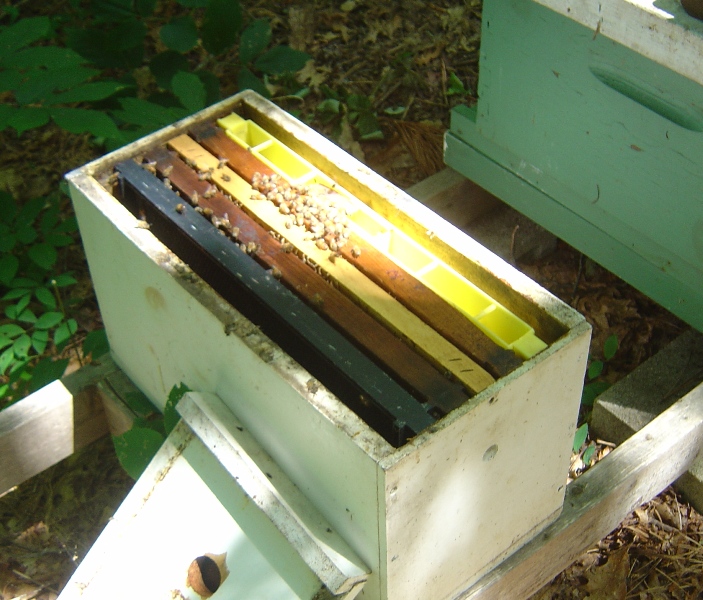
 Left:  Bees feeding on sugar candy and pollen patty


The season started slowly.  It was a rainy spring, and the spring lasted much longer than usual.

Spring actually arrived a few weeks early.  But the cold wet weather kept the bees inside the hives and not collecting honey and nectar.

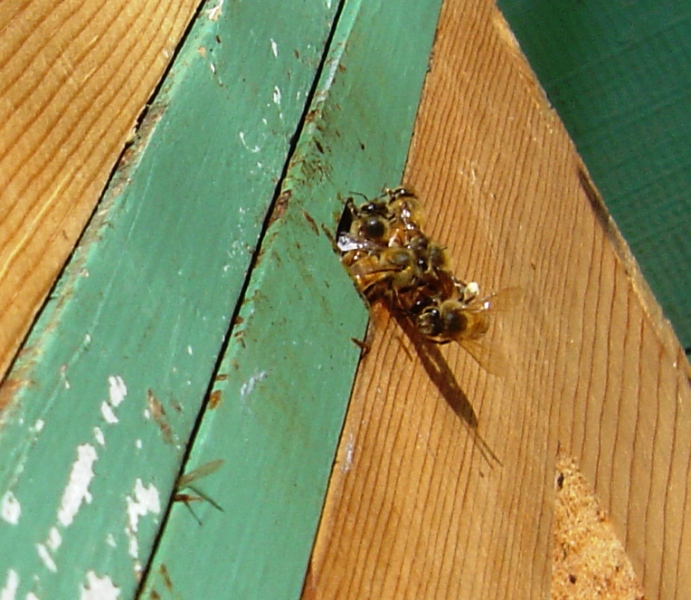
Right:  Foraging worker bee


During the summer we had just the right about of sun and rain, no drought, plenty of flowers, plenty of work for the bees to do, but I could tell that the nectar flow was sporadic.

One day the bees would be flying like crazy, the next there would be very little activity.

As I look back on the season I cannot point to one thing that went  wrong.  It must have been a culmination of many factors.

My biggest problem this year was robbing.  I thought it would be smart to start the new colonies way across the property from the old ones.  The new location would offer more sun light during the winter months.


 Left:  Weak hive being fed sugar syrup from a division board feeder.  These feeders were robbed out by strong colonies nearby


This was an attempt on my part to decrease the winter losses by allowing the hives to warm up a little more on sunny winter days than the older hives have the darker old location (we’ll see how this works).  I also thought that by moving the new hives away from the older hives there would be less opportunity for robbing to start.

Well I was I ever wrong. 

The new hives which had a smaller population of bees were continually robbed out not only of any sugar syrup I was feeding them, but also of any stores of nectar that they were collecting themselves.  Without stores of honey and pollen the new colonies would not increase. 

I tried feeding the sugar syrup into the small hives first, then the larger hives….  I tried feeding  the sugar syrup into the larger hives first, waiting a day, then feeding syrup to the smaller hives.

I even resorted to building a feeding station away from the hives, that all the bees could access and get syrup.

Nothing I tried worked….  Yes the bees from all the hives would come and take 5 gallons of sugar syrup from the yard feeder in two days, but as soon as it ran out, the strong hives would return to robbing out the weaker hives.   

I also did not like feeding wasps, hornets, and yellow jackets with my precious public sugar syrup feeder.

So the fat hives got fatter, and the weak hives got weaker and died out.

Although the larger hives produced a surplus crop of 60 pounds of honey, I could not trust the honey since it was probably mixed with sugar syrup.

I fed all the honey back to the hives.

All this robbing was not conducive to increasing our hive numbers.  New packages, hive splits, and nucs brought on site from other locations were all destroyed by the robbing bees. 

Only three hives survived the summer and will be over wintered.

Then there was the small hive beetle……  I’ll talk about that next time.
And there's next year.....  There's always next year.

May 30, 2011

May Bee

The long holiday weekend finds me posting my first blog post for the month of May.


Left:  A worker bee collecting pollen and nectar from our peach tree.


For some reason we have experienced a 90% loss of our over wintered hives this season.

Two hive have died in the month of April alone. Not usual once they make it through March

The longer than average, and cooler, spring has not helped us much. We experienced cool rainy wet weather for almost two weeks in the middle of May, not conducive for brood rearing by already weakened hives.

Last week however, the cold wet weather broke, and we are now experiencing warmer days. That means happy days for the bees who are now able to fly and collect the much needed nectar and pollen for the spring buildup.

Today I started rearing a small number of queens.


Right.  Newly grafted plastic cell cups.  These cells were wet grafted using royal jelly saved from queenrearing in 2010.


It takes 16 days for a queen to grow under the proper conditions. I took newly hatched eggs from three of my hives and wet grafted them into artificial cell cups. Wet grafting is the process of placing a small drop of royal jelly in the bottom of each artificial cell cup, and floating a young larva onto it. (a 50 / 50 mix of plain yogurt and water will do as well for a priming medium)

Eggs from the different hives were grafted into different color cell cups. Red, yellow, and black cups were used. This will allow me to tell which hive the larva was grafted from later on.

The cells were placed into a cell bar and installed in a cell starter hive.

I create my cell starter hives by taking a 5 frame nuc box with a division board feeder half full of sugar syrup, add a frame of nectar and a frame of pollen.

I have modified the nuc box so it has a screened bottom. The entrance is closed so the bees will not be able to leave.

Before I graft the artificial cells, I shake nurse bees (from frames of open brood) into the 5 frame nuc box. I use at least three frames of nurse bees, and two frames of bees from adjoining frames. Of course before I do all this I find the queen, in the contributing hive, and make sure she is not shaken into the cell starter hive!

I took my grafted cell bar frame and installed it in between the pollen and nectar frames.

The trapped nurse bees will have nothing to do but feed the young larva. Because the cell starter is queenless they will build queen cells out of the young larva.

I will wait 24 hours and check to see how many of the grafts were accepted.

Our package bees were delayed from the supplier down south. Many orders were canceled. They must have been having a difficult time there as well.

Last week we finally received our new bees. They had a long trip from Florida, traveling by night, the truck would stop for the day to allow the bees to fly. It took several days to make the trip, and the trailer of bees arrived late one night. About 20 volunteers enjoyed unloading them off the trailer.

We must have been quite the site to the neighbors….. a mass of beekeepers with flashlights (and head lamps) scurrying round a dirt road, walking to and forth, unloading over 200 packages of bees. I know I received at least one strange look from passer buy on the main road. What are you doing walking at the side of the road in a full bee suite? They must have said!

That being said I brought my bees home and installed them the next morning. They were not happy to see me….. I guess they were grumpy from they’re long trip. Several met me with the message I should leave them alone. But…. Then… You have to show them who’s boss! (bees don’t listen well)


Left:  A cell starter colony mad up of a division board feeder, a frame of pollen, grafted cells, a frame of open nectar, an undrawn frame, and nurse bees.


The first nucleus of bees was installed without event. Five full frames of bees, honey, and brood were installed on previously drawn out comb. They were very active, fliying the next day in the warm sun.

I noticed that the second nucleus of bees had a recently emerged queen cell, capped brood, but no eggs or larva…. I did see a queen though.


Right:  A well feed queen larva.  The nurse bees have added royal jelly to the cell.  The larva floats on the royal jelly and eats it as it grows.  It will take 16 days for the queen to grow from an egg to a fully developed virgin queen.


She must have emerged during the long trip from Florida… But had she mated? Or was she still a virgin, unable to lay worker eggs? I would have to wait to see.

Two days later I checked the hive…. No eggs or brood…. But the queen was still there. Perhaps I would have to replace her with a laying queen…. If one could be found this time of year…..

Two days after that I checked the hive again…. Yes, there were new eggs laid in many cells. I guess this queen might just be fine. Perhaps she had mated during the trip north, while the truck was stopped in another state, and had managed to find her way back to the truck before it continued on.

Perhaps she has a little Pennsylvania or Georgia influence in her now! If you know what I mean!

Maybe she will be just fine…..


Maybee

April 25, 2011

Pieces Of April

It is the last week of April and the flowers are just starting to bloom!

Three weeks ago we had our first Crocus pop its head out of the ground and open up so the bees could collect some fresh pollen.

 Right:  Worker bee brings white pollen back to the hive


We have had a lot of rainy weather, which is typical for this time of year, but the temperatures have been cooler as well. My year to year records show that we are running about three weeks behind last year, and about a week behind “normal” with the spring foliage.

On warm days the bees are flying, bringing back small bundles of yellow and white pollen on their hind legs. This could only mean that there is brood rearing taking place inside the hive.

Left:  Warm days finally allow the bees to fly and gather nectar and pollen.


This is the time of year that the bees need to quickly build up in number s in order to take advantage of the spring honey flow we have here on the cape.

Starting mid May to around the end of July is our only real honey producing time here on Cape Cod.

This year the cooler temperatures have hindered the buildup. At least in my hives!


Right:  A worker bee collects pollen from a white Crocus flower


This weekend I will begin to feed them sugar syrup, which will help stimulate brood rearing as well.

I guess when the queen sees supplies being brought into the hive she feels comfortable enough to begin laying and laying eggs.


Left: Another worker bee collects nectar


Our scheduled delivery of packaged bees from down south have bee delayed for a second time this season. I have not heard the reason why, but perhaps they are having as much trouble with their bees as we are here in the North East.

Temperatures reached the high 60’s yesterday and today allowing an increase in the bees activities.

With the forsythia in full bloom there is much pollen to be gathered. My peach tree is just starting to bloom and I know the Red Maple is not far behind.


Right:  Pollen patties and sugar candy placed in the hives allow the workers to feed even on cold wet days when they cannot forrage.


My battle with the mice in the shed continues.

Each time I pick up a box, or a bucket I find the evidence of mice damage. Chewed gloves, newspaper, and table cloths litter the corners of the space.

I found one dead family inside the garden tool box.

How they managed to get in will remain a mystery forever.

But these things too will pass. And for now I am anticipating a good honey season.

After the last two bad ones, it is the least that mother nature can do,

March 15, 2011

Middle Of March

It’s the middle of March and the snow drops are just starting to pop open here on Cape Cod.  Spring is just around the corner!

After enduring a long cold winter, mice, mites, small hive beetles, starvation, falling trees, and poor food stores, the bees are just now beginning to emerge from their winter cluster.


:Left:  Small Hive Beetle, dead on the sticky board.

          In March?  Realy?


The queen should have started raising young by now, and the new bees will be taking fights for the first time. How many of them emerge fly a little too far from the hive and become too chilled to make it back home?


Right:  Bees were finally able to take flight during warmer days here and there over the past couple of weeks.


We lost 50 percent of our hives to this long winter. We did not receive our January thaw as we do most years. Temperatures remained in the 30's for six weeks or more.  But then, I don't have to tell most of you that!

Of the remaining hives two are very weak. The Kona queens I introduced last year seam to be longing to return to the warm Hawaiian weather they came from.

They did not do well here.

Of course they have done better than the dead hives… That’s it… Look on the bright side!


Left:  My storage shed.... Filled with beekeeping equipment, boxes, frames.....  And mice!


One hive that started the winter with plenty of bees, frames of pollen, and frames full of honey was found dead a couple of weeks ago.

I had given them candy feed towards the end of January.

At that time they were robust…. 7 frames of bees. When I dissected the dead hive I found thousands of dead bees only two inches away from capped honey. There were still 6 frames of capped honey in the hive and three frames full of pollen. Why did they die? During the cold weather they probably just could not shift over to the food stores. What a shame!


Right:  The mice are so bold as to build nests in plain sight!


Sometimes you cannot figure out what went wrong. Is it natural selection? Or just a stupid beekeeper?

But yes…. As beekeepers often do, I spend a lot of my time during the winter thinking and dreaming about the bees. Perhaps answers come during those long months. I do have something up my sleeve… Perhaps I can do something about the weather!

The mice have been taunting me all winter as well. Despite my best attempts at thwarting them I continue to find chewed items around the storage shed. They love the newspaper wrapped wax foundation. An expensive item to snack on.


Right:  Outside temperature 34 degrees....  Inside temperature 60.

Perhaps I've found a way to control the weather!


One family even had the nerve to build a home right in plain sight, as if to dare me to try to do something about it!

But bright days are ahead! The weather is warming. The days are getting longer. The first flowers are poking there sleepy heads above the ground. The bees are starting to fly…

Yes the bees are starting to fly!

January 30, 2011

So you think you are helping?

In the middle of December I quickly checked the bees and found that they had consumed almost all the candy feed I had installed in the hives in November. At that time I added more candy assuming that it would be consumed in about a month (January).

 Left:  A dead bee in the snow about 500 feet from the hive.  It is just too cold for them to be flying that far away from home.


With more snow predicted for our area this week, I thought it would be timely to check the hives and add more sugar candy if needed. I made the candy in the morning, let it cool and went to the apiary to install a piece in each hive. Sure enough, the candy feed was gone in most of the hives.


Right:  Looking through the hole in the inner cover you can see the bees are still alive.


With temperatures in the mid 30’s I carefully slipped a piece of candy under each inner cover so as not to disturb the clusters of bees. While I lifted the inner cover I took a peak inside to see how the bees were doing.


Right: Many dead bees after taking a cleansing flight in 35 degree weather.


All the hives seemed to have plenty of bees. I did notice some dysentery spots on the top of the frames in the last hive I checked. I had fed the bees sugar syrup and medicated against nosema in the fall, so I did not think much of it.

This morning I went out to look over the hives. This is what I found.


Left:  a closeup of the mess.


We have had a long spell of cold, probably five or six weeks where the bees have not been able to fly and take cleansing flights.

Apparently having been disturbed by my candy the bees broke cluster and attempted a cleansing flight.


Right:  An even closer look.


Being too cold, many of the bees were not able to return to the hive.

I have included photographs of the resulting mess.

I will have to wait for warmer weather before I can check these two hives to see if any of the hive will survive the rest of the winter.

And I thought I was helping them.

January 26, 2011

Bees And Snow

It is the middle of winter here on Cape Cod. In fact we are getting another snow storm as I write this blog post.


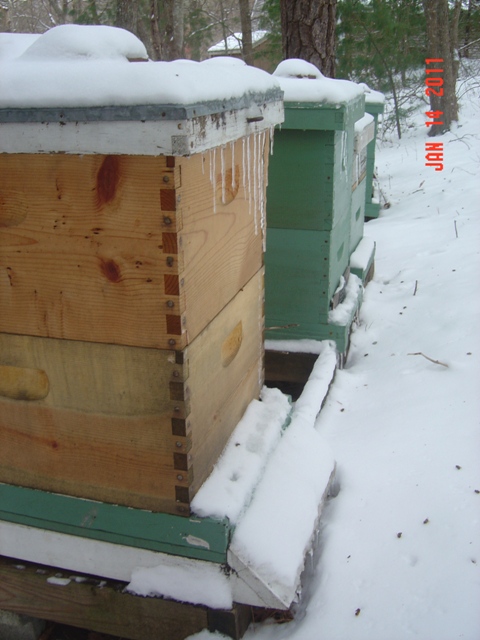
Left:  Icickles hanging from the cover of  the hives.


Already the cold winter has claimed the life of one of our hives. It seems that they starved only inches away from stores of honey and pollen. The weather must have turned cold for too long of a time. The cluster of bees could not move to a new location.

I cleaned out the dead bees and placed the hive bodies in storage. There are 8 frames of honey left in the dead hive along with frames full of pollen. A new package of bees in the spring will take advantage of the hard work done by the deceased hive.

Right:  Bees were flying and still gathering pollen in the middle of November.  They needed all the food they could gather after the bad summer season we had last year.


As I mentioned earlier we are experiencing an unusually snowy and icy winter this year. The snow from one storm turns to ice just before another one hits. Of course we have been fortunate compared to other towns further inland where they have received much more snow. Our deepest accumulation has only been 6 inches or so, compared with feet of snow inland.

The bees have been consuming much bee candy this winter due to the colder temperatures. It was nice to see them flying in December, on the two days temperatures climbed into the 40’s.

I have one nuc hive I am trying to over winter in one hive body that seems to be struggling. It contains one of the queens I raised last summer. I’m keeping my fingers crossed that they will make it.


Left:  A cluster of bees feeding on bee candy places on the tops of the frames of comb.  This candy will last them about one month.


This time of year I start to get a little stir crazy. I find myself sitting and dreaming about the bees and spring. There is not much beekeeping activities to do other than wait for the new catalogs and the bee journals to come in the mail. Well...  a glass of mead while reading a bee journal isn't all that bad..

What new products will we find and be trying out this season?

There it is again…. As the snow falls….. I’m dreaming of summer!

October 3, 2010

Board Bees Bad Bees

Well it is already October and the beekeeping season for 2010 is over.


Left:  Honey on the hives in July                                                    Right:  Same colony at the end of August

And I for one am glad to see it go.

A very early spring brought a very early end to the honey flow, which lengthened the amount of time that there was a lack of nectar and pollen this summer. It does not make a beekeeper happy to see his large, ready to collect hives, sitting with nothing to do.

Our nectar flow here on Cape Cod starts towards the end of June and ends the first week of August.

This year however it started two to three weeks early, and ended two to three weeks early. This resulted in a longer period of time between the spring and fall flows, (almost two months).

Left:  A colony started in spring never moved up into the upper hive body.  This colony has not produced enough stores to survive the winter.


This combined with late and poor goldenrod nectar flow resulted in starvation conditions for our hives. Hives with 50 to 60 pounds of honey on the hives in July were starving by the end of August.

Of course I am partly to blame for this. We had such good success building up colonies in the spring that there were many more mouths to feed when the nectar flow stopped early.

We have been feeding our hives sugar syrup and pollen substitute since the third week in August. Although the bees are doing well now, and there are plenty of stores in the hives because of the feedings, the additional sugar syrup and the length of time of the feeding has created other problems. namely, a large increase in the small hive beetle population in the hives. I haven't even mentioned the Varroa Mites!


Right:  Small hive beetle larva crawling out of the hives onto the bottom boards.  The feeding of sugar syrup for such an extended period caused an explosion in small hive beetle.  Varroa Mites can be seen on the bottom board as well.


Additionally our five new colonies never moved up into the upper hive bodies. Frames and new foundation were never drawn out or filled with stores for winter. This forced us to combine these weak colonies in order to ensure their survival. The queens of the weaker colonies were killed and their colonies were combined with other weak colonies.


Left:  Colony being prepaired for winter.  Crisco oil and sugar patty to fight Tracheal Mites, Pollen patty to provide polen when none is being collected, Menthal oil towel to fight Tracheal Mites, Small hive beetle trap, Apastan strips to fight Varroa Mites.  Sugar syrup is being fed with a division board feeder in a different hive body.


So, now that the hives are well fed, and in good shape to survive the cold, damp, cape cod winter, it is time to reflect on this past beekeeping season.

Hmmm… What would I, could I, have done different…… right now I just don’t know!

But I will have plenty of time to think about it over the next few months.

August 3, 2010

Hot and humid days

It has been over a month since my last post.

During the last week of June I placed 13 queen cells into queen-less nuc hives. These queens, once emerged, would mate naturally and start to lay eggs in about 14 days and build new colonies.

Above:  Four mating nucs ready for queen cell introduction.
The jars will be filled with sugar syrup to feed the nucs.

Unfortunately this year’s early spring lead to early hot and humid weather.

The main honey flow stopped a month early, and because we were feeding sugar syrup to the nuc colonies, robbing ensued. Many of the mating nucs and new queens were destroyed by strong colonies that came and killed bees while robbed them of their honey and syrup.

Only 3 mated queens survived.


Left:  Virgin queens in queen cages.  These queens are being taken care of by nurse bees.  They have been placed in a queenbank colony.


As part of an experiment I had taken eight of the queen cells and arranged them so the virgin queens would emerge into queen cages. These cages were placed into a queen-less, brood-less hive. The queens emerged into the cages and were taken care of by the surrounding nurse bees. Because the virgin queens would be in the cages, they would not be able to mate.


Right:  A closer view of the banked queens.  A special frame with wire guides hold the cages in place.  The plastic cell cup seals the top of the cage.


I have had some success over the past two years rising queens. One of my strongest hives this year is lead by a queen I produced last summer. She is the daughter of the queen from my strongest hive the previous year. I have noticed that the most uncontrollable part of queen rearing is the mating process.

Above:  You can see the open queen cell inside the cage
as well as the queen.  Nurse bees surround the queen and
feed here through the cage openings.  I'm sure they are trying
to find a way to get her out!

You can pick the best stock to breed from, graft the youngest larva, place them into the strongest cell starter colony, then place them into the largest cell builder, move the cells at the right time into mating nucs, have the cells emerge successfully….. Only to see your beautiful large, genetically selected queens fly off to mate with…. Well, any drone that comes along!

It is all left to chance at that point.


Above Left:  A screw lid jar is used to put the queen to sleep with carbon dioxcide.  It only takes a few minutes       
                                                     
Above Right: CO2 is dispensed through water so the flow can be seen and regulated.

It is apparent that the week link, the place where you loose control, in the process is mating. So I started looking into the process of instrumental insemination of honey bees. With II the breeder can control the mating process and select the specific genetic material to mix with the genetics of the virgin queen.

Above:  Insemination device I have been working on.  CO2
is fed through a hose to keep the queen asleep.

My intent was to take the caged virgin queens and use them to learn about the instrumental insemination process.

Above:  Working out the "bugs" in the system
Need smaller hooks and glass tips.

For several months I have been learning, designing, and building the equipment I believed to be required. I read books, blogs, web pages, and watched videos.


Left:  This queen was put to sleep, placed in the instrument, manipulated, but not inseminated.  She woke up about 15 minutes later.
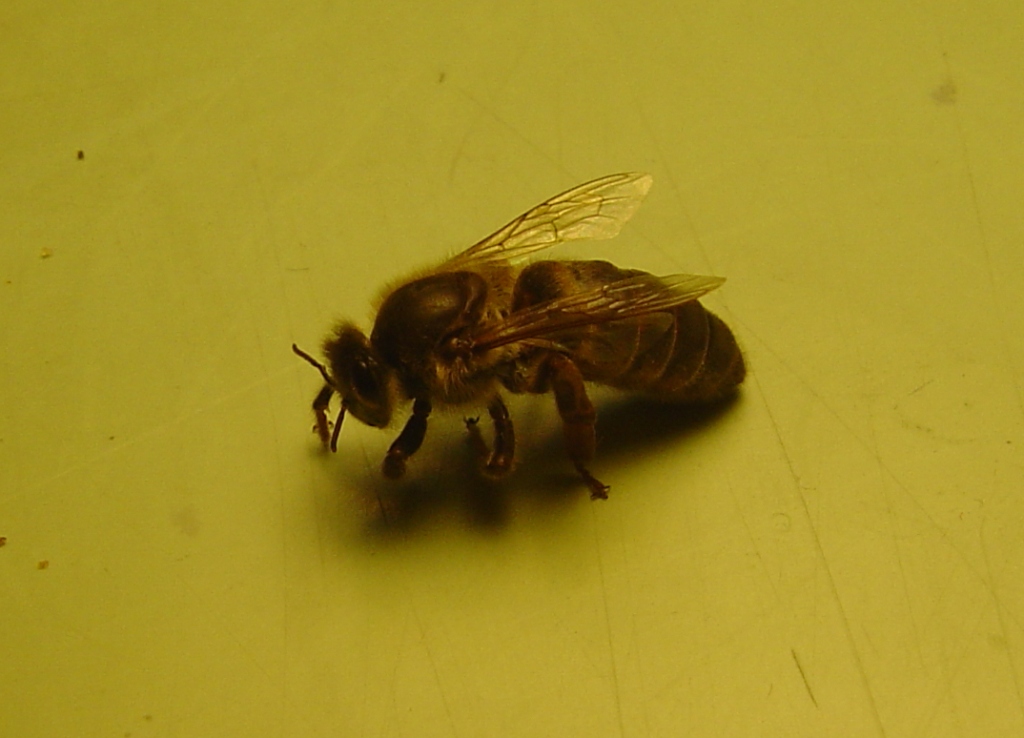


Needless to say my first attempts have had some successes and many failors….


Right:  Second queen was put to sleep, manipulated, and woke up.  She was not inseminated.


But I have learned a lot.

I will share more in future posts.

.

Spring

Spring
Peach Pollen

Spring Pollen

Spring Pollen

Queen Cell

Queen Cell
Well Fed Queen Cell

Marked Queen

Marked Queen
Queen produced from my second graft attempt